
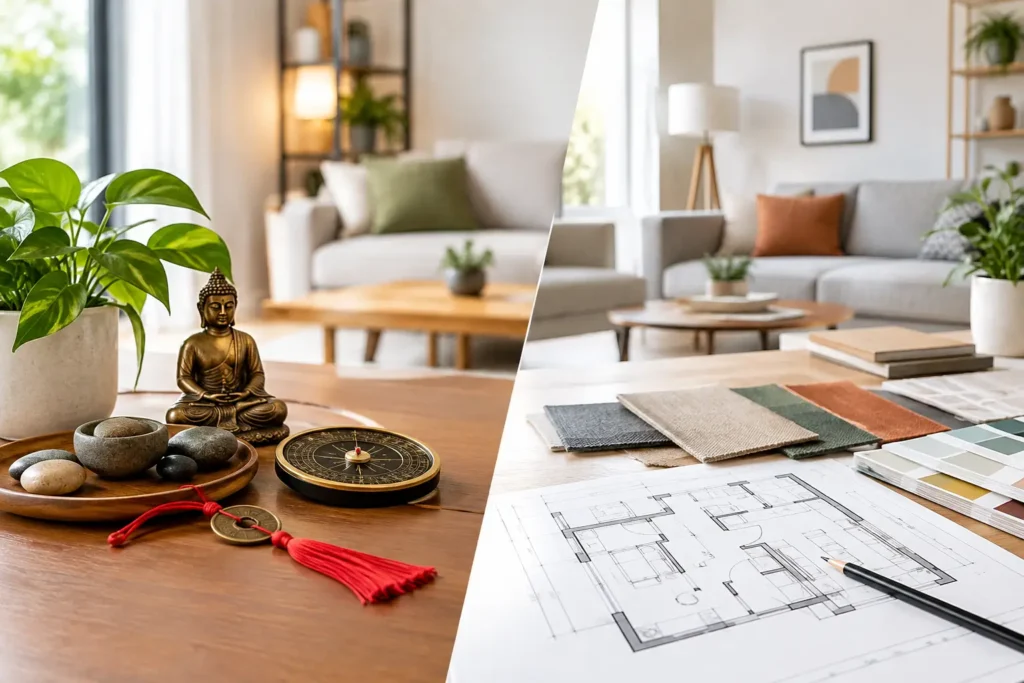
A new home can be beautifully furnished and still feel difficult to settle into. An office can look polished yet support poor concentration, strained teamwork, or an unconvincing client experience. That is where the question of feng shui audit vs interior design becomes practical: these services may influence the same space, but they assess it through very different systems.
Interior design shapes how a property looks, functions, and feels in daily use. A feng shui audit evaluates the relationship between the property, its surrounding environment, time, and the people occupying it. One is not a replacement for the other. Knowing the distinction helps homeowners, buyers, and business owners invest in the right support at the right stage.
What an Interior Designer Is Hired to Solve
Interior design is concerned with the functional and visual performance of a space. Depending on the scope, an interior designer may plan room layouts, circulation paths, storage, lighting, furniture, finishes, colors, materials, and decorative details. For a renovation or new fit-out, they can translate a client’s needs into a coherent brief and coordinate the design direction with contractors or other project professionals.
The central questions are usually direct: Can the household move comfortably through the home? Does the office have enough meeting space? Is there adequate task lighting? Will the finishes withstand daily use? Does the design represent the brand or the owner’s personal style?
A good designer balances these practical requirements with budget, measurements, construction constraints, and aesthetics. Their work can make a compact apartment feel orderly, help a retail store guide customers through key zones, or make a workplace more usable for employees.
However, interior design does not usually include a Chinese metaphysical assessment of the property’s facing direction, external landforms, annual influences, or the occupants’ BaZi profiles. A designer may work with intuition and principles of comfort, but that is different from a formal feng shui methodology.
What a Feng Shui Audit Examines
A feng shui audit is a structured assessment of a property’s environmental and energetic configuration. It considers the building as more than a set of rooms. The audit examines how the property receives and retains qi, how its layout distributes that influence, and how the space may be aligned with its occupants’ objectives.
For a residential property, the review may include the building’s facing and sitting directions, floor plan, main door, bedroom locations, kitchen placement, internal circulation, unit shape, and the immediate external environment. Nearby roads, junctions, drains, neighboring structures, open views, and building forms can all be relevant.
For a commercial or office audit, the assessment often extends to the reception area, leadership seating, workstations, meeting rooms, entrances, cashflow-related areas, and the relationship between the premises and its surrounding commercial environment. Business use matters. An office designed for a founder-led firm may require different considerations from a retail outlet, clinic, or professional practice.
A qualified consultation may also use the occupants’ BaZi information to provide more individualized recommendations. This is particularly useful when a family is deciding bedroom allocation or when business partners want a clearer basis for seating, work areas, or timing around a move.
The output is not simply a list of lucky objects or generic rules. A professional audit should identify priorities, explain the reasoning in clear terms, and provide recommendations that can be applied within the property’s real limitations.
Feng Shui Audit vs Interior Design: The Core Difference
The simplest distinction is purpose. Interior design organizes the physical experience of a space. Feng shui assesses the property’s environmental and metaphysical suitability, then recommends adjustments intended to support harmony, well-being, and relevant life or business goals.
Their tools are also different. An interior designer works with plans, materials, lighting specifications, furniture selections, visual concepts, and construction details. A feng shui consultant works with property orientation, forms, spatial sectors, time-based considerations, and, where appropriate, personal metaphysical data.
This difference affects the type of advice you receive. A designer may recommend relocating a sofa to improve conversation and visual balance. A feng shui consultant may recommend a different placement because of the room’s sector, door alignment, or the resident who uses that space. Both recommendations can point to the same result, but they arrive there through different reasoning.
Neither approach should be treated as a substitute for technical professionals. Feng shui recommendations do not replace structural, electrical, architectural, legal, accessibility, or safety advice. Likewise, an attractive layout does not automatically mean that a property has been assessed through feng shui principles.
When to Start With a Feng Shui Audit
For a property purchase, an audit is most valuable before commitment, whenever possible. A buyer has more options before signing a contract than after moving in. A pre-purchase review can help identify whether the property’s orientation, layout, surroundings, and suitability for the intended occupants warrant further consideration.
For a renovation, the strongest timing is before finalizing the layout and before major construction begins. At this stage, recommendations about doors, room use, bed positions, kitchen planning, office seating, or the location of key functions are easier and less expensive to incorporate. Once plumbing, built-ins, partitions, and electrical points are fixed, some adjustments become limited or costly.
For a business, engage a feng shui consultant early when selecting a new site, planning an office move, opening a retail unit, or restructuring leadership areas. Early input gives the business room to make strategic choices rather than relying on cosmetic remedies after the fact.
That said, an audit can still be useful in an existing home or operational office. Not every recommendation requires renovation. The consultant can distinguish between immediate adjustments, medium-term improvements, and changes that are only worthwhile during a future remodel.
When Interior Design Should Lead
Interior design should lead when the main need is usability, style, renovation coordination, or a complete furnishing plan. If your home lacks storage, your restaurant needs a more efficient service flow, or your office has poor acoustic privacy, design expertise addresses those issues directly.
It is also the appropriate starting point when a project requires technical drawings, contractor coordination, material specifications, and a defined visual outcome. Feng shui can inform the brief, but it does not replace the detailed execution required to build or furnish a space well.
The best sequence often depends on how much change is planned. For a full renovation, conduct the feng shui audit first, then provide the relevant recommendations to the interior designer. For a light refresh of an existing property, the designer may begin with the current layout while the audit identifies key areas that should not be compromised.
How Both Services Work Together
The strongest projects treat feng shui and interior design as complementary disciplines rather than competing opinions. The feng shui consultant establishes strategic spatial priorities. The designer translates those priorities into a functional, attractive, and buildable environment.
For example, a consultant may identify the preferred area for the primary bedroom, a suitable position for a business owner’s desk, or an entrance condition that needs careful treatment. The designer can then resolve circulation, cabinetry, lighting, furnishings, and finishes around those requirements. This approach reduces the risk of late changes that affect cost or design consistency.
Collaboration also requires judgment. Not every feng shui recommendation needs a major construction response, and not every aesthetic preference should be discarded. Budget, lease restrictions, structural conditions, family needs, brand identity, and building rules all matter. A professional process prioritizes changes with the clearest relevance and practical feasibility.
Questions to Ask Before You Engage Either Professional
Before booking, clarify the decision you are trying to make. Are you choosing between properties, renovating a home, opening a business, or trying to improve an established space? The answer determines the right service scope.
Ask a feng shui consultant what information is required, whether an on-site or remote audit is suitable, and whether the assessment includes personal BaZi considerations. Ask an interior designer what deliverables are included, how revisions are handled, and whether they manage procurement or construction coordination.
If both professionals will be involved, share plans early and agree on the sequence. The goal is not to force one discipline to perform the other’s role. It is to create a property that works beautifully in practical terms while being considered through a disciplined feng shui framework.
A well-chosen space deserves more than a last-minute styling decision. Whether you are buying a family home, planning a renovation, or setting up a business, make the key spatial decisions early enough that your property can support the life and work you intend to build within it.