
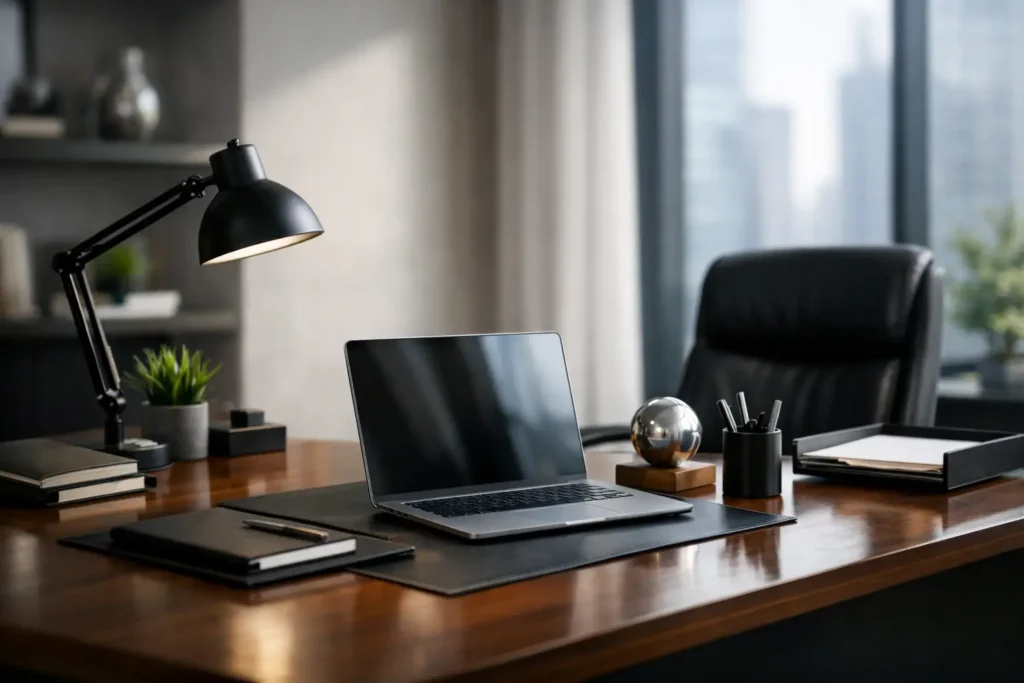
A desk is not merely a surface for a laptop, files, and coffee. It is the command point from which you handle decisions, conversations, revenue, and responsibility. Learning how to arrange office desk properly means looking beyond tidiness. In feng shui, the desk position, what you see in front of you, and what sits around you can influence how supported, focused, and in control you feel while working.
For business owners, managers, and professionals, the goal is not to create a decorative workspace. It is to establish a practical working environment that supports concentration, authority, clear communication, and consistent action. The best arrangement will depend on the room, the nature of your role, and the building’s fixed limitations. Still, several principles apply to most offices.
Start With the Command Position
The strongest desk placement usually allows you to see the office door without sitting directly in line with it. This is known as the command position. From this location, you have awareness of people entering the space while maintaining a stable and protected place to work.
Ideally, place your desk diagonally across from the door, with a solid wall behind your chair. A solid backing represents support. In practical terms, it also reduces the distracting feeling of movement behind you. If your back faces a doorway, you may find yourself repeatedly turning around, remaining alert to interruptions, or feeling less settled during important work.
Sitting directly opposite the door is not always ideal either, especially when the doorway creates a straight line toward your chair. Fast traffic, noise, and visual movement can create pressure at the desk. If this layout cannot be changed, use a lower cabinet, a plant, or a modest screen to soften the direct path without blocking access or making the office feel cramped.
A home office often has more constraints than a corporate suite. You may need to work within a bedroom, living room, or compact shared area. In that situation, prioritize seeing the entrance from your chair and creating as much backing as possible. A high-backed chair can help when a solid wall is unavailable, but it is not a complete substitute for proper positioning.
How to Arrange Office Desk for Clear Workflow
Once the desk is in the best available position, arrange its surface according to how you actually work. Feng shui is more effective when it supports behavior. A desk that looks balanced but makes daily tasks inconvenient will not serve you for long.
Keep the central working area clear. This is where your primary activity should happen: writing, reviewing documents, planning, or using your keyboard. A crowded center creates visual friction and makes every task feel like it requires an extra step. Your screen can sit centrally if most of your work is digital, while your keyboard and active documents should remain within easy reach.
Place frequently used items on your dominant-hand side. If you are right-handed, this might include a notebook, phone, calculator, or current project folder. The opposite side can hold items that support planning and reference, such as a desk lamp, organizer, or a small number of important books. The exact placement is less important than maintaining a clear distinction between active work and stored materials.
Do not let old documents become permanent desk residents. Papers connected to completed projects, unpaid invoices, unresolved disputes, or abandoned ideas can keep mental attention tied to matters that should be archived, delegated, or addressed. Create a defined holding system for active documents and remove the rest at the end of each week.
Create Support Behind You and Space Ahead
A wall behind your chair is generally favorable, particularly for people in leadership, client-facing, or decision-making roles. It represents stability and provides a sense of support. Avoid sitting with your back to a large window whenever possible. Windows can be energizing and bring valuable natural light, but too much open space behind you may feel exposing or unsettled.
If a window must be behind you, use a supportive chair and consider curtains, blinds, or a substantial credenza to create visual grounding. The objective is not to shut out light. It is to balance openness with support.
The area in front of your desk also matters. If you face a wall at close range, work can feel restrictive, especially during strategic planning or creative work. Where possible, leave some visual space ahead. A view toward an open section of the room, a calm piece of art, or a well-kept wall is generally more supportive than facing clutter, exposed storage, or a blank surface inches from your screen.
Avoid placing your desk directly beneath a heavy beam, large overhead shelf, or sharply angled ceiling. These features can create a feeling of pressure. In a leased office where structural changes are not possible, moving the chair and monitor slightly away from the lowest point may improve the experience considerably.
Manage Clutter as a Business Issue
Clutter is not simply an aesthetic problem. It can obscure priorities, delay decisions, and signal that your workspace has no clear purpose. In feng shui terms, stagnant objects may contribute to stagnant energy. In operational terms, clutter causes lost time and unnecessary mental load.
Keep only the tools required for your current responsibilities visible. That may include a monitor, laptop, writing materials, a phone, and one or two active files. Everything else should have a home in a drawer, cabinet, or labeled storage system.
Be especially selective with these common desk items:
- Broken stationery, depleted batteries, and nonfunctioning electronics
- Old business cards, outdated brochures, and expired notes
- Large stacks of unread documents
- Too many personal objects or gifts
- Food containers, cups, and unfinished drinks
Personal items can make an office feel more human, particularly in an intense work environment. The trade-off is that too many objects compete for attention and can make a professional space feel unfocused. Choose a few meaningful pieces rather than displaying everything at once.
Use Light, Plants, and Color With Restraint
Good lighting supports energy and accuracy. If possible, position your desk so daylight comes from the side rather than directly in front of or behind your screen. This reduces glare and helps maintain visual comfort. A quality desk lamp is useful for focused reading and late-day work, particularly in offices with flat overhead lighting.
Healthy plants are often a good addition because they introduce living energy and soften hard office lines. Select one that fits the available light and that you can realistically maintain. A neglected or dying plant does not create the intended effect. In smaller offices, one healthy plant is usually enough.
Color should serve the function of the room. Neutral tones, natural materials, and controlled accents tend to support sustained work. If your role requires calm communication or detailed analysis, overly aggressive reds and intense patterns may feel distracting. If the office is excessively cold, gray, or sterile, a warmer accent through wood, soft lighting, or restrained earth tones can create more balance.
Address Common Office Desk Challenges
Not every workspace can follow ideal principles. Cubicles, hot desks, shared offices, and executive suites all present different constraints. The practical approach is to improve what you can control rather than waiting for perfect conditions.
In a cubicle, position your screen so you can maintain awareness of the main entrance or aisle where possible. If you cannot change the desk direction, a small reflective object placed discreetly can help you remain aware of activity behind you. Keep personal belongings contained and avoid using the top of filing cabinets as overflow storage.
In a shared office, define your territory with clean boundaries. Use trays, drawers, or closed containers rather than allowing documents to spread across common surfaces. If colleagues regularly pass close behind your chair, consider whether a slight desk adjustment or higher-backed seating can reduce distraction.
For executives, the main risk is often excess rather than lack. An oversized desk filled with ceremonial objects, awards, and piles of decisions waiting to be made can weaken the desk’s actual purpose. Authority is better expressed through order, access, and a clear working center than through visual accumulation.
Align the Desk With Your Role and Timing
A general office arrangement provides a solid foundation, but a property-focused feng shui assessment goes further. Classical analysis considers the specific building, directional influences, room use, occupants, and relevant time period. A desk position that is acceptable in one office may not be the strongest choice in another.
For entrepreneurs and organizations making significant property, renovation, or relocation decisions, an office feng shui audit can help identify suitable work areas, leadership seating, meeting room placement, and adjustments that match the business’s operational needs. Personal BaZi analysis can also add perspective when career direction, work style, or timing is part of the question.
A well-arranged desk will not replace sound management, skill, or disciplined follow-through. It can, however, give those efforts a more supportive place to operate. Begin with the chair: make sure you can see the door, feel supported behind you, and face a clear field of work. Then remove what no longer belongs there and leave room for the decisions that do.