
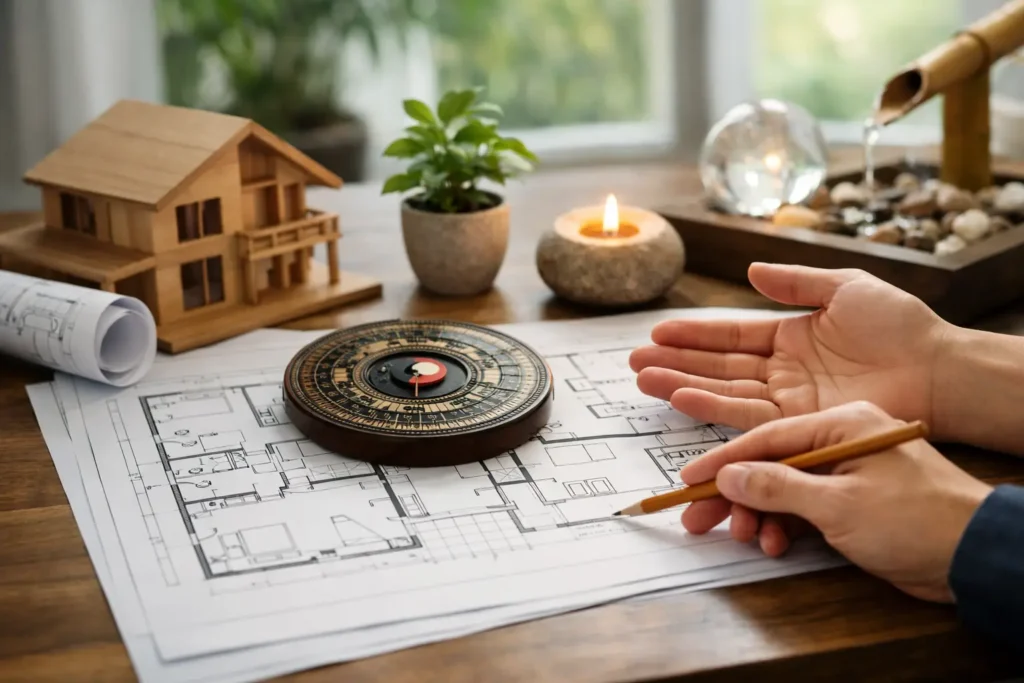
A new house gives you one rare advantage – the chance to set the energy of the space before daily habits, clutter, and rushed decisions take over. That is why feng shui for new house planning is most effective at the beginning, not after problems show up. The earlier you assess layout, orientation, room use, and move-in timing, the easier it is to align the property with the people who will live there.
Many homeowners approach feng shui after renovation stress, family tension, poor sleep, or a sense that the house never quite feels settled. By then, the work is often corrective. In a new home, the process can be strategic instead. You are not just decorating a space. You are deciding how qi will collect, circulate, and support key areas of life such as health, relationships, stability, and financial momentum.
What feng shui for new house really covers
A common mistake is to reduce feng shui to furniture placement or symbolic items. In professional practice, a proper review starts with the property itself. The external environment, building period, facing direction, floor plan, entrance location, kitchen position, bedroom arrangement, and surrounding landforms all matter. These factors form the underlying structure of the home’s qi before interior styling even begins.
This is why two houses with similar square footage can perform very differently. One may feel calm and supportive, while another feels draining despite having better finishes. Feng shui is not based on taste. It is based on whether the property’s form and energetic pattern are suitable for the occupants and their goals.
For buyers, that means feng shui should ideally begin before purchase or before final renovation decisions are locked in. For owners who have already collected the keys, the next best time is before full move-in.
Start with the house, not the accessories
When evaluating a new property, the first question is whether the house has a sound feng shui foundation. The main door, the flow from entrance to interior, the placement of major rooms, and the relationship between the house and its external surroundings should be reviewed first. A home with a weak base cannot be fully corrected by adding decorative cures.
The entrance is especially important because it governs how qi enters and how the home receives opportunities and support. If the main door opens into a cramped, blocked, or overly exposed area, the quality of incoming qi may already be compromised. Likewise, if the layout causes qi to rush out too quickly through a direct door-to-window alignment, the house may struggle to retain stability.
Bedrooms deserve equal attention. A master bedroom placed over a garage, near heavy structural pressure, or in a highly disturbed sector may affect rest and relationship quality over time. The kitchen also has a major role, particularly in matters tied to health, nourishment, and the management of household energy. In classical feng shui, these are structural concerns, not minor details.
The role of direction, period, and occupant match
A serious feng shui assessment for a new house is not only about what looks balanced. It also considers timing and directional influence. In classical systems, the construction or move-in period of the property can affect the energetic chart of the home. The facing direction then helps determine how qi patterns distribute across different sectors.
This is where online checklists usually fall short. A southeast room is not automatically good for everyone, and a northwest room is not automatically problematic. It depends on the house chart, the function of that room, and the people using it. A favorable sector for one purpose may be less suitable for another.
Occupant compatibility matters as well. The house should not be reviewed in isolation from the residents. A property that supports one family member’s work and visibility may not support another person’s health or emotional balance equally well. In some cases, adjustments can be made through room allocation and usage planning. In other cases, the issue starts with the house selection itself.
Renovation decisions that matter more than people expect
In a new house, renovation is the stage where feng shui can be applied with the most control. Once walls, doors, kitchen positions, and built-in features are fixed, your options narrow. This is why layout planning should happen before aesthetic detailing.
Door placement can change how qi travels between rooms. A relocated stove can improve or weaken the practical use of a kitchen sector. The position of the bed wall, study desk, and work area can influence how occupants use supportive directions within the home. Even the decision to open up too much space can have trade-offs. An airy layout may look modern, but if qi disperses too quickly, the home may feel unsettled rather than expansive.
Bathrooms are another area where practical planning matters. In feng shui, they are not simply judged as good or bad in a general sense. Their impact depends on which sector they occupy and how that interacts with the property’s overall chart. This is why broad statements such as “never place a bathroom here” are often too simplistic.
Move-in timing is part of the process
Many homeowners focus on the physical setup of the property and overlook timing. In Chinese metaphysics, date selection is not a ceremonial extra. It is part of how you activate a house and begin living in it under a more supportive pattern.
A move-in date should ideally consider the house, the key occupants, and the activity itself. Not every available weekend is equally suitable. If the date conflicts strongly with the residents or introduces unnecessary disruption, the start of occupancy may feel more difficult than it needs to be.
This does not mean every delay is harmful or every favorable date guarantees immediate results. It means timing is one of the controllable variables in a major life transition. For clients making a long-term property decision, it makes sense to manage that variable properly.
What you can do before a full audit
If you have just received your new home and are not ready for a full consultation yet, there are still a few sensible principles to follow. Keep the main entrance clear, bright, and easy to navigate. Avoid filling the home with unopened boxes for too long after moving in, because stagnant storage can slow the settling process.
Use each room according to its intended purpose as soon as practical. Bedrooms should support rest, not become temporary storage zones for months. Dining and living areas should feel usable and stable, not half-finished indefinitely. A new house begins to establish its rhythm through actual use.
You should also avoid making random feng shui changes based on mixed advice from social media clips, generic bagua maps, and product-driven recommendations. These often conflict with one another and can create more confusion than benefit. If the property is important enough to renovate carefully, it is worth assessing carefully too.
When professional feng shui for new house planning is worth it
Not every new home requires the same level of review. If you are moving into a temporary rental, your priority may be functional adjustments. If you are purchasing a long-term family home, building a custom property, or investing heavily in renovation, a professional audit becomes far more valuable.
The highest return usually comes when decisions are still flexible. That may mean reviewing shortlisted properties before purchase, confirming the orientation and chart of the chosen home, planning room allocation based on the occupants, and selecting an appropriate move-in date. This kind of structured approach is especially useful for buyers who are balancing family needs, work demands, and long-term financial goals.
For homeowners who want clarity rather than folklore, the benefit of professional feng shui is precision. You are not relying on superstition or trend-based advice. You are evaluating the property as a system, with specific recommendations tied to layout, timing, and use.
A well-planned house does not solve every life issue on its own. Feng shui is one part of a broader decision framework that also includes personal destiny, timing, and practical action. But when a home is chosen and set up thoughtfully, it can stop working against you. That alone is a meaningful advantage.
If you are standing in an empty new house with plans, quotes, and deadlines in front of you, this is the right moment to be exact. The best feng shui decisions are often the ones made before the first sofa arrives.