
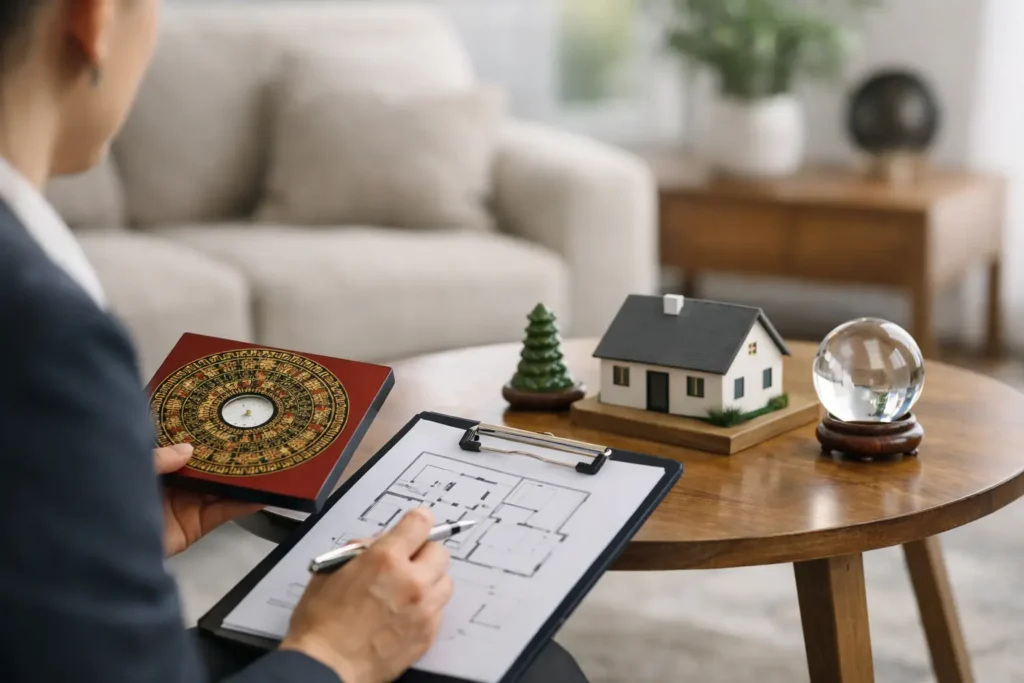
A home can look well designed on paper and still feel difficult to live in. Sleep becomes lighter, family tension rises without a clear reason, or progress in work and finances seems harder to sustain after a move. A residential feng shui audit is meant to examine that gap – the difference between a property that is merely functional and one that actively supports the people living in it.
For many homeowners, this is where feng shui becomes practical. The question is not whether a house has attractive decor or a popular floor plan. The real question is whether the property’s orientation, room placement, external surroundings, and time-based influences are aligned with the occupants’ goals. A proper audit treats the home as a system, not a collection of furniture choices.
What a residential feng shui audit actually evaluates
A residential feng shui audit is a structured assessment of how a home interacts with its environment and the people inside it. That includes the building’s facing and sitting directions, the landform and road approach outside the property, the distribution of qi within the interior, and the way key sectors affect areas such as rest, relationships, health, and wealth.
This is also where professional methodology matters. Authentic feng shui is not based on generic lucky objects or fixed decorating rules. It relies on calculations, directional analysis, and classical frameworks that interpret the property in context. Two homes in the same neighborhood can produce very different effects because orientation, layout, surrounding forms, and move-in timing all change the assessment.
In practical terms, the audit often focuses on the main door, bedrooms, kitchen, study or work area, and the overall movement pattern through the home. These are high-impact zones because they affect how qi enters, settles, and influences daily life. A strong result is not always about making dramatic changes. Often, it is about identifying which areas already support the household and which ones need correction or more careful use.
Why homeowners request a residential feng shui audit
Most people do not request an audit out of abstract curiosity. They usually have a decision to make or a pattern they want to improve. That might involve choosing between properties, settling into a newly purchased home, renovating, or understanding why an existing space feels unsettled despite repeated efforts to improve it.
For some, the priority is wealth and career stability. For others, it is family harmony, children’s study performance, better sleep, or stronger support for a couple relationship. The audit gives these goals a property-based framework. Instead of relying on guesswork, the homeowner gets a clearer view of which parts of the house are helping and which may be weakening results.
This is especially relevant when a property appears good by conventional standards but underperforms in lived experience. A bright unit with a modern layout can still have an unfavorable main door alignment, an imbalanced bedroom placement, or external forms that create pressure. Good feng shui is not the same as good interior styling, though the two can work well together.
The main components of the audit process
A professional residential feng shui audit usually starts with accurate property details. Floor plans, compass readings, move-in dates, and information about the surrounding environment all matter. If the audit includes personal alignment, the consultant may also review the occupants’ birth data to understand how the home and the residents interact more precisely.
From there, the property is assessed through classical feng shui methods rather than broad lifestyle advice. Directional sectors are mapped, the quality of qi flow is examined, and key rooms are tested for how they support specific outcomes. The main entrance receives close attention because it governs how the property receives external qi. Bedrooms are equally important because that is where occupants spend long, passive hours and receive the strongest environmental influence.
The kitchen is another critical point. In feng shui, it is not simply a utility area. Its position and relation to other rooms can affect household stability, resource management, and overall balance. A stove placed in a weak sector is not always a problem by itself, but depending on the chart of the home, it may need practical adjustment or a change in usage strategy.
External features are also part of the picture. Nearby roads, intersections, waterways, neighboring structures, and elevation patterns can all influence the quality of incoming qi. This is one reason online advice can only go so far. Without examining the property as a whole, recommendations may be incomplete or misleading.
What you can expect after a residential feng shui audit
The value of an audit lies in clarity. Homeowners should expect specific findings, not vague spiritual language. A useful assessment explains which sectors are favorable, which rooms are best assigned to which occupants, where activity should be increased or reduced, and what practical adjustments can strengthen the property’s support.
Those adjustments vary. In some homes, furniture repositioning can improve the use of a room significantly. In others, room allocation matters more than object placement. There are also cases where structural limitations mean the goal is not perfection but optimization. A consultant should be able to identify what is realistically changeable, what should be prioritized first, and what may simply require strategic management.
This point is important because feng shui is not a magic override for poor property choices or personal decision-making. A home with a compromised layout can often be improved, but not every issue can be eliminated completely. The objective is to maximize support and reduce pressure, using the property more intelligently.
Common misconceptions that lead to poor decisions
One of the most common mistakes is treating feng shui as decoration. People often assume that adding symbolic items, changing colors, or placing mirrors in fashionable ways is enough. In reality, these are secondary at best. If the main structure, room usage, and directional setup are wrong, decorative additions usually do little.
Another misconception is that every home can follow the same advice. This is where mass-market content tends to fail. A southwest bedroom is not universally good or bad. An open kitchen is not automatically favorable or unfavorable. The answer depends on the property chart, the occupants, and the timing cycle affecting the house.
Timing matters more than many first-time clients expect. Feng shui is not static. A property that worked well in one period may need updated strategies later, especially after major renovations or changes in occupancy. This is one reason structured consulting is more reliable than relying on old notes or generalized charts found online.
When to schedule an audit
The strongest time to arrange a residential feng shui audit is before committing to a property. That gives you the most room to choose wisely and avoid expensive corrections later. The next best time is before renovation, when room functions, entrances, and internal flow can still be adjusted efficiently.
An audit is also useful after moving in if problems begin to emerge, or when life priorities shift. A couple preparing for children, a family supporting a child’s academic performance, or a homeowner transitioning to remote work may all need the home to support different outcomes than before.
For buyers comparing multiple units, an audit can be particularly valuable because it introduces discipline into the selection process. Instead of deciding only on aesthetics, price, or developer reputation, the buyer can evaluate which property offers the stronger long-term fit.
Choosing a professional approach
Not all feng shui services are equal. A credible audit should feel organized, analytical, and relevant to real property conditions. It should not rely on fear-based selling or broad promises. The best work is measured, specific, and tied to the actual constraints and possibilities of the home.
This is where a modern consultancy model makes a difference. Firms such as East Chen Consultancy present feng shui in a clearer service format, which helps clients understand what is being assessed, what deliverables to expect, and how the recommendations can be applied. That structure is especially useful for homeowners who want serious guidance without unnecessary mysticism.
A residential feng shui audit is ultimately about making your home more supportive of the life you are building. If you are making a property decision, planning renovations, or trying to understand why your current home is not working as it should, a precise audit can turn instinct into strategy – and that is often where better outcomes begin.