
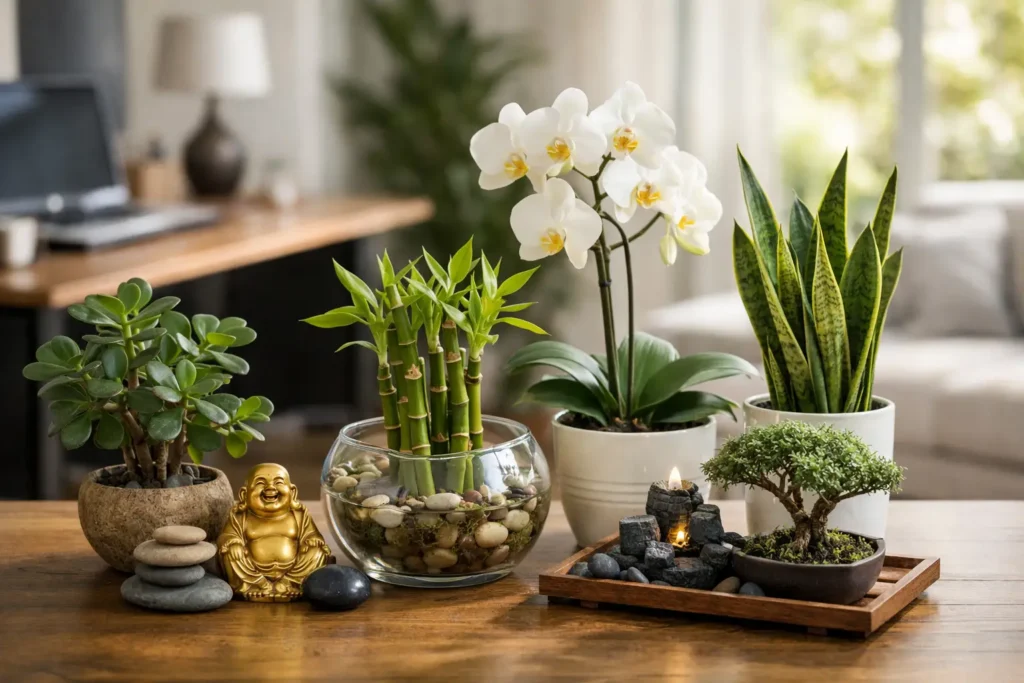
A plant placed beside a front door, on a work desk, or in a quiet bedroom does more than fill an empty corner. In feng shui, the best feng shui plants are chosen for their living wood energy, healthy appearance, and suitability for the specific room. A struggling plant, however expensive or symbolic, does not create the same effect as one that is well cared for and appropriately positioned.
Plants are supportive environmental features, not substitutes for a proper assessment of a property’s layout, facing direction, occupants, and timing. Their value lies in how they soften harsh lines, introduce vitality, and help balance an area that feels overly static, sharp, or neglected.
What Makes a Plant Favorable in Feng Shui?
Healthy green growth is the starting point. Plants represent the Wood element, associated with growth, renewal, flexibility, and upward movement. For this reason, they are commonly considered in spaces connected with family harmony, learning, health, and professional development.
The plant’s form matters as much as its name. Rounded, full, and gently arching leaves are generally easier to use than sharply pointed foliage. A clean pot, stable placement, and adequate light are equally relevant. Feng shui is not improved by forcing a plant into a dark corner where it cannot thrive.
Scale also matters. A large floor plant can anchor a spacious lobby or living room, while a compact tabletop plant is more appropriate for a desk or shelf. In a small room, too many pots can make the environment feel crowded rather than refreshed.
The 12 Best Feng Shui Plants
1. Money Tree
The money tree is one of the most recognized plants for wealth-oriented spaces because of its braided trunk and hand-shaped leaves. It is often placed in a living room, reception area, or office where financial activity and opportunity are part of the intention. Choose a healthy, proportionate specimen rather than assuming a large plant is automatically better.
2. Jade Plant
With its rounded, coin-like leaves, jade plant is frequently associated with steady accumulation and business stability. It works well near an office entrance, on a bright work surface, or in a business setting that needs a restrained touch of greenery. Because jade plants need strong light, placement should follow horticultural reality first.
3. Lucky Bamboo
Lucky bamboo is compact, adaptable, and especially useful where floor space is limited. Its upright stems create a clean vertical quality that suits desks, counters, and shelves. Keep the container clean and the water fresh. Cloudy water or yellowing stalks undermine the tidy, vital effect the plant is meant to provide.
4. Rubber Plant
A rubber plant’s broad, glossy leaves give it a substantial presence without appearing aggressive. It is a practical choice for a living room, office waiting area, or an underused corner that needs visual weight. Its darker foliage can feel more formal than lighter-leaved plants, making it suitable for professional interiors.
5. Areca Palm
The areca palm has soft, feathered fronds that can reduce the severity of hard architectural lines. It is often useful in larger rooms with exposed corners, angular furniture, or a strong concentration of metal and glass. Give it enough clearance to spread naturally instead of compressing it against furniture.
6. Parlor Palm
For apartments, private offices, and bedrooms with reasonable indirect light, the parlor palm offers a smaller-scale alternative to larger palms. Its leaves create a calm, layered effect. It is best used as one intentional feature, not one of many unrelated decorative items competing for attention.
7. Philodendron
Heartleaf philodendron is valued for its softer leaf shape and trailing or climbing habit. It can bring life to a bookcase, bright shelf, or home office, particularly where the room feels overly rigid. Train and trim it regularly. Tangled, dusty growth can quickly look neglected.
8. Pothos
Pothos is forgiving for many first-time plant owners and works well in moderately lit interiors. Its cascading leaves can soften the edges of shelving and cabinetry. Avoid allowing long vines to create clutter around walkways, cords, or work areas. Healthy growth should support order, not introduce visual disorder.
9. Chinese Evergreen
Chinese evergreen is a reliable option for lower-light spaces and has a balanced, full form. It is useful in hallways, offices, and rooms where a more delicate plant may not cope well. Varieties with excessive sharp striping may feel visually busy, so choose a calmer leaf pattern when the room already contains strong patterns or high contrast.
10. Peace Lily
The peace lily’s white blooms and deep green leaves can bring a composed quality to a living area or office. It is often selected for spaces intended to feel more settled and harmonious. Its name should not be treated as a guarantee of relationship outcomes, but its soft visual character can support a calmer room when it is thriving.
11. Snake Plant
Snake plants are practical for busy households and workplaces because they tolerate missed watering better than many indoor plants. Their upright leaves create strong vertical energy, which can be useful in areas that feel low or stagnant. Because the leaves are pointed, use them with discretion. They are generally better beside a console, in an office, or near an entry than immediately beside a bed or close to seating where their form feels overly sharp.
12. Citrus Tree
A small citrus tree can be an excellent choice for a bright patio, sunroom, or business entrance with sufficient sunlight. Fruit-bearing plants are traditionally appreciated for their association with abundance and fruition. This option requires more care than a pothos or snake plant, so it is only favorable when the environment can genuinely support it.
Where to Place Feng Shui Plants
The entrance is a common starting point because it shapes the first impression of a home or business. A healthy plant near, but not obstructing, the entrance can make the approach feel more welcoming. Keep doorways, paths, and sightlines clear. A large pot placed directly in the flow of traffic is not a favorable use of space.
In a living room, place plants where they can soften empty corners, heavy furniture, or an area with little natural vitality. Avoid turning every surface into a display. One substantial plant and one smaller supporting plant often create a more composed result than a collection of mismatched containers.
For an office, select plants that do not interfere with documents, screens, or client interaction. A money tree, lucky bamboo, jade plant, or parlor palm can work well depending on available light and desk size. In commercial settings, plant placement should also consider the business function of the area, staff circulation, customer flow, and the building’s overall feng shui configuration.
Bedrooms require greater restraint. A small, well-maintained plant may be suitable in a spacious, ventilated room, but avoid creating a dense indoor garden around the bed. If the room already feels active, crowded, or difficult to rest in, adding more Wood energy may not be the right answer.
Common Mistakes That Reduce the Benefit
The most frequent mistake is treating a symbolic plant as a universal remedy. A money tree in a poor location does not correct an unsuitable room layout, missing sector, unfavorable door relationship, or a broader issue affecting the property.
Dead leaves, dry soil, pests, cracked pots, and artificial plants covered in dust are also counterproductive. If a plant no longer suits the light conditions or your ability to care for it, replace it with a more practical variety. Consistent care is more valuable than an impressive but high-maintenance choice.
Avoid placing plants where they block mirrors, doors, windows, or essential circulation. Also consider the needs of children and pets, as several common houseplants may be toxic if chewed. Feng shui recommendations should support a functional, safe environment rather than conflict with it.
When Plant Placement Needs a Feng Shui Audit
Generic placement guidance is useful, but a personalized recommendation depends on details that a plant list cannot address. A residential or commercial feng shui audit can assess the property’s facing direction, floor plan, room usage, external environment, and the occupants or decision-makers involved.
This distinction is particularly relevant when the goal is specific: improving a business environment, supporting a renovation decision, preparing a new home, or addressing a space that continues to feel unsettled despite repeated decorating changes. In those cases, plants may form part of the recommendation, but they should follow the assessment rather than lead it.
Choose plants you can keep genuinely healthy, place them with enough room and light to grow, and let their presence reinforce a space that is already clear, functional, and purposeful.