
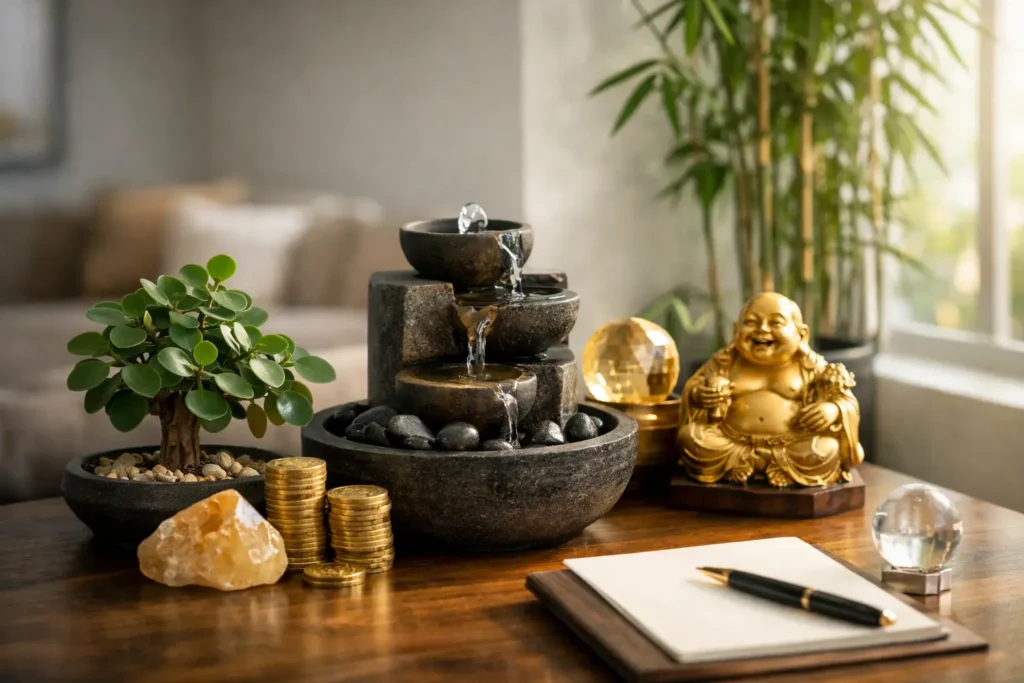
A wealth corner is not a spot where an object automatically produces financial results. In classical feng shui, it is a part of a wider environmental assessment: how qi enters and moves through a property, whether the sector is supported by its surroundings, and whether the space suits the people using it. If you are researching how to activate wealth corner, begin with this principle. Effective activation starts with accurate identification and correction, not with decorative shortcuts.
For homeowners, the goal may be greater financial stability and better household opportunities. For a business owner, it may be stronger cash flow, more productive client relationships, or improved decision-making. The appropriate feng shui approach depends on the property, its orientation, the timing involved, and the people living or working there.
What Is the Wealth Corner in Feng Shui?
The wealth corner is commonly associated with the southeast, which corresponds with the Xun trigram in the Bagua. Xun is traditionally connected with gradual growth, resources, abundance, and development. In a simplified approach, people locate the southeast area of a home, room, office, or shop and improve its condition.
That approach can be useful as a starting point, but it is not a complete feng shui audit. A southeast corner that is missing, heavily cluttered, occupied by a damaged storage area, or affected by an unfavorable external feature may need correction before any enhancement is considered. Likewise, a property’s wealth potential cannot be assessed from one corner alone.
Classical systems also consider the building’s facing direction, period of construction or major renovation, floor plan, surrounding landforms, and time-based energy patterns. In Flying Star feng shui, for example, different sectors can carry different influences based on the property’s natal chart and the current year. This is why a remedy that appears appropriate in one home may be unsuitable in another.
How to Activate Wealth Corner With a Sound Foundation
Before adding any symbolic item, make the area functional, clean, and calm. This is not merely an aesthetic preference. Stagnant, neglected, or obstructed areas are generally not considered supportive of healthy qi flow.
Start by locating the southeast sector using a reliable compass reading from the center of the home or the relevant room. For a business, assess the entire premises first rather than selecting only a desk corner. If you are using the Bagua as an introductory method, be consistent about the method you choose. Do not combine a door-based Bagua map with compass directions without understanding how the systems differ.
Once the sector is identified, examine what is physically present. A useful wealth area should be reasonably bright, clean, ventilated, and easy to access. Remove broken items, old cardboard boxes, unpaid bills, dead plants, unnecessary storage, and anything that makes the space feel forgotten. If the corner is part of a hallway or utility area, focus on keeping it orderly and well maintained rather than forcing elaborate decor into a practical passageway.
The next step is to evaluate whether the sector is structurally compromised. A missing southeast corner, a bathroom in that sector, a sharp external structure pointing toward it, or a major internal beam may call for a more tailored solution. These conditions are not a reason for alarm, but they should be assessed carefully. Feng shui works best when remedies respond to actual conditions rather than broad assumptions.
Support the Wood Element Thoughtfully
The southeast is associated primarily with the Wood element. Healthy wood symbolism can be introduced through well-kept living plants, wooden furnishings, vertical forms, or appropriate green and deep teal accents. The emphasis is on vitality and quality, not quantity.
A thriving plant can be suitable when it receives adequate natural light and can be cared for consistently. A struggling plant does the opposite of what most people intend. Choose a plant that fits the scale of the room and avoid creating visual clutter with multiple small objects. If plant care is impractical, natural wood, botanical artwork, or a considered color treatment may be a better option.
Water can nourish Wood in the Five Elements cycle, which is why fountains and aquariums are often recommended for wealth corners. However, water features are not universally appropriate. Their placement should account for the property’s feng shui chart, the sector’s annual influences, and the home or business layout. A poorly positioned water feature can create maintenance issues and may be energetically counterproductive. Never add water simply because a generic wealth-corner checklist suggests it.
Use Symbols as Intentional Reinforcement
Traditional wealth symbols may reinforce a clear intention when they are used with restraint. A quality bowl, a meaningful prosperity image, a healthy plant, or an organized place for financial planning can be more effective than a crowded display of coins, figurines, and charms.
For a home office, the southeast sector may be an appropriate place for records related to financial goals, business planning, or professional development, provided the area remains organized. For a retail business, the priority may be a clear, welcoming route to the cash counter and a properly positioned work area rather than symbolic decoration alone.
The strongest symbolism is practical. A clean filing system, accurate bookkeeping, a working payment process, and a workspace that supports focused decisions are aligned with the real-world actions that build wealth. Feng shui should support disciplined management, not replace it.
Check the Wealth Corner Against Annual Energy
A common mistake is treating feng shui recommendations as permanent. Annual energy shifts can change how a sector should be used or enhanced. The southeast may carry different influences from one year to the next, and some years may call for quietness, reduced activity, or elemental adjustments rather than activation.
This matters especially when considering renovations, drilling, moving heavy furniture, installing a fountain, or placing highly active objects. A feature that is suitable in a favorable sector can be less appropriate when annual influences require a more cautious approach.
For this reason, annual feng shui review is valuable for property owners and businesses making significant decisions. It can help determine which areas are best used for activity, meetings, financial planning, rest, or renovation during a given period. A professional audit evaluates the building as a whole, rather than isolating one sector from its larger energy pattern.
Consider the Building Before the Room
Interior enhancements have limits when the exterior environment is unfavorable. Qi enters through the approach to the property, the main entrance, windows, roads, nearby structures, and surrounding landscape. A wealth sector may be well decorated, yet the overall property can still feel unsupported if the entrance is dark, the pathway is blocked, or the interior layout sends movement directly out through a rear door.
Begin with the main door. It should be clean, safe, visible, and in good working order. Address poor lighting, broken fixtures, cluttered entryways, and damaged doors before concentrating on a southeast corner. In commercial properties, the entrance, reception area, customer flow, management office, and cash-handling areas often deserve equal attention.
The same principle applies to a bedroom or home office. If the room is dominated by disorganization, poor positioning of the bed or desk, and inadequate light, activating one small corner will not resolve the larger issue. Good feng shui is spatial strategy. It considers the behavior a space encourages every day.
Match Feng Shui to Personal Timing
A property may have favorable opportunities, but the people within it also have their own BaZi charts, luck cycles, and personal elemental balance. One person may benefit from a more active work environment, while another needs stability, protection, or better timing before pursuing a major financial move.
This does not mean that every plant, color, or desk position must be personalized. It means major decisions deserve more than a generic remedy. Property purchases, office moves, renovations, business launches, and investment-related discussions can benefit from combining environmental analysis with personal timing.
At East Chen Consultancy, a structured feng shui audit can assess the property’s layout and directional factors, while BaZi consultation provides a separate perspective on personal potential and timing. Used together, these methods offer a clearer framework for decisions that affect both place and person.
When a Simple Wealth-Corner Setup Is Enough
A simple southeast enhancement is usually reasonable when you want to improve an already functional area without making major claims about outcomes. Keep it clean, introduce a healthy Wood element, improve lighting where appropriate, and use a meaningful but restrained symbol of growth or financial order.
A deeper assessment is more appropriate when the property has an irregular floor plan, major external obstructions, a missing sector, a planned renovation, or a significant business objective. It is also worthwhile if you have followed general advice but the space still feels difficult to use, unsettled, or poorly organized.
Treat the wealth corner as a prompt to improve the condition of your environment and the quality of your financial habits. When the space is accurate, maintained, and aligned with the wider property, it can become a practical reminder to make clearer decisions and support sustainable growth.