
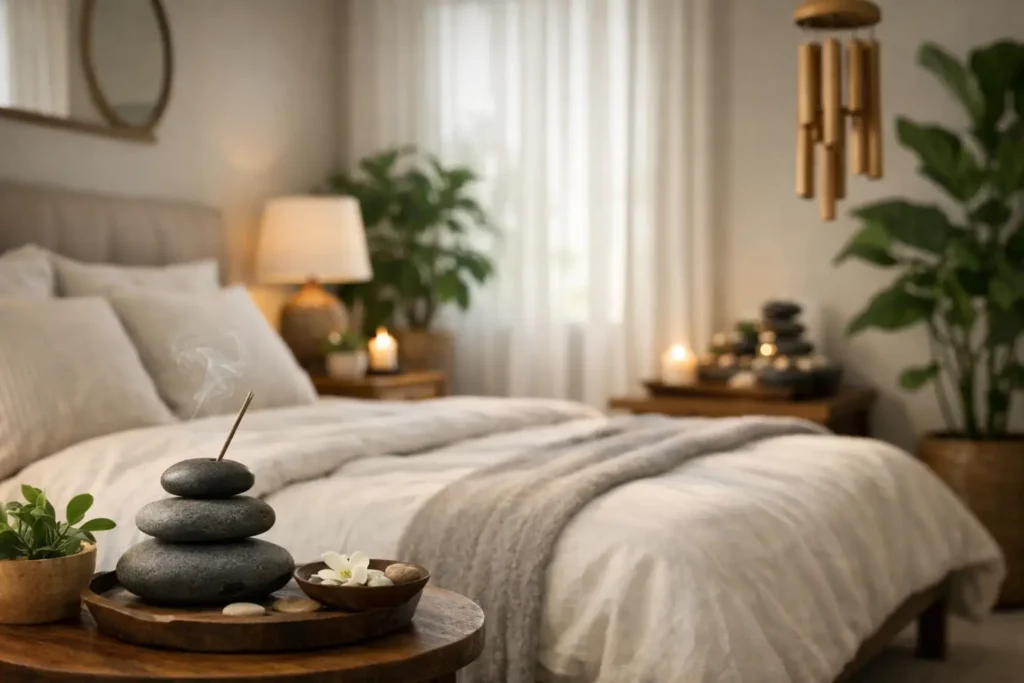
A bedroom can look polished and still feel unsettled. Poor sleep, a sense of exposure in bed, constant visual noise, or tension between partners often point to an environment that is not supporting rest. Learning how to improve bedroom feng shui starts with the room’s layout and daily function, not with buying symbolic décor.
In classical feng shui, the bedroom is a private space associated with restoration, intimacy, and personal stability. Its arrangement should help the occupant feel protected, grounded, and able to switch off from the demands of work and daily life. Small adjustments can improve the experience of a room, but meaningful recommendations depend on the property’s actual layout, external surroundings, and the people using it.
Start With the Bed’s Command Position
The bed is the central piece of furniture in a bedroom. Before considering colors, crystals, or decorative items, assess whether its placement provides support and awareness.
Ideally, the bed should have a solid wall behind the headboard. This creates a sense of backing and stability. A substantial headboard is generally preferable to an open metal frame or a bed positioned with no support behind it. The bed should also allow the sleeper to see the bedroom door without being directly aligned with it.
Direct alignment between the bed and the door is traditionally avoided because the room’s movement and activity flow directly toward the person resting. If the room layout makes this unavoidable, a well-proportioned bench, low cabinet, or screen may help slow the visual and physical line between door and bed. The appropriate solution depends on the available space. A large divider in a compact room can create more pressure than it resolves.
Avoid placing the bed beneath an exposed beam, a sharply sloped ceiling, or a heavy overhead feature. These conditions can create a feeling of compression, particularly when positioned directly above the head or torso. If relocation is not possible, consider whether a canopy, ceiling treatment, or a different sleeping orientation can reduce the visual weight overhead.
How to Improve Bedroom Feng Shui Through Balance
A bedroom needs yin energy: quieter, softer, more settled qualities that support sleep. Yet a room that is too dark, crowded, or inactive can feel stagnant. The objective is not to make every bedroom identical. It is to create a balanced setting that is calm without feeling neglected.
Begin with lighting. Bright ceiling lights are practical for cleaning and dressing, but they are not always suitable for winding down. Use layered lighting where possible, with bedside lamps or wall lights that provide a warmer, lower level of illumination in the evening. Choose fixtures that feel proportionate to the room. An oversized chandelier above a small bed may become visually dominant, while insufficient light can make the room feel closed in.
Color should support the room’s intended use and the occupant’s overall needs. Soft earth tones, warm neutrals, muted greens, gentle blues, and blush shades are commonly easier to live with than highly stimulating red, intense black, or strong neon accents. That does not mean red or black are automatically negative. In feng shui, color is considered in relation to the room’s sector, the home’s larger configuration, and the individual’s personal elements. A color that works well in one home may not be the right choice in another.
Texture matters as much as color. Natural fabrics, a stable bed frame, comfortable bedding, and a visually quiet floor area can make a room feel more settled. Prioritize quality and proportion over a collection of decorative cures.
Clear What Does Not Belong in the Bedroom
Clutter is not merely an aesthetic issue. In practical terms, it makes a room harder to clean, reduces usable space, and keeps unfinished tasks within sight. From a feng shui perspective, excessive storage and visual congestion can obstruct the room’s ability to feel restful.
Pay particular attention to the space under the bed. It is best kept clear when possible, especially directly beneath where the body rests. If storage is unavoidable in a small home, use this area for soft, neutral items such as spare linens rather than work files, broken items, sharp tools, or emotionally charged belongings from the past.
The same principle applies to bedside surfaces. A nightstand does not need to be empty, but it should be functional. Keep essentials such as a lamp, water, book, or glasses within reach, then remove stacks of paperwork, unpaid bills, old medication, and miscellaneous cables. Your bedroom should not operate as an extension of your office.
For couples, make room for both people. Two bedside tables, where space allows, create a more balanced arrangement. This is less about strict symmetry than equal access, comfort, and recognition within a shared space. If one person has no place for personal items while the other dominates the room, the imbalance is worth addressing.
Be Careful With Mirrors and Electronics
Mirrors are one of the most discussed bedroom feng shui features. A mirror can make a small room feel larger and improve natural light, so it is not automatically unsuitable. The concern arises when a mirror directly reflects the bed, creating movement and visual activity in a space intended for rest.
If a mirrored closet door faces the bed and sleep is disrupted, test a simple adjustment first. Cover the mirror at night for several weeks or reposition a freestanding mirror. Observe whether the room feels calmer. Avoid making costly changes based only on a general rule when a practical trial can provide useful information.
Electronics deserve similar consideration. A television, workstation, exercise equipment, and multiple charging devices can turn the bedroom into a multi-purpose zone. For many clients, the issue is less metaphysical than behavioral: screens extend work hours and interfere with a consistent bedtime routine. If a desk must remain in the bedroom, separate it visually from the sleeping area and close away work materials at the end of the day.
Address Doors, Windows, and External Pressure
The bedroom is influenced by more than its internal furniture arrangement. Its relationship to doors, windows, corridors, bathrooms, and the exterior environment can affect comfort and privacy.
A bed placed directly between a door and a large window may feel exposed because energy, light, noise, and air movement travel through that line. Good curtains, a solid headboard, and a revised bed position can help, but each remedy should fit the room rather than block it unnecessarily.
Bathroom doors should remain closed when not in use, particularly if the bathroom directly faces the bed. Keep the bathroom clean, ventilated, and in good repair. Leaking fixtures, poor drainage, and persistent dampness are practical maintenance problems first, and they also weaken the sense of care and order within the home.
Look outside as well. A bedroom facing harsh streetlights, a busy road, sharp rooflines, or nearby construction may require stronger window treatments, landscaping, or a different furniture layout. Professional feng shui audits consider these external forms alongside internal arrangements because a home does not exist in isolation from its surroundings.
Avoid Generic Remedies When the Layout Is Complex
General bedroom advice is useful as a starting point, but it has limits. Compass direction, the property’s period, floor plan, external landforms, and the occupants’ BaZi can change the recommendations significantly. For example, a bedroom located in a certain sector of the home may need a different balance of elements than another bedroom, even when both use the same colors and furniture.
This is also why placing a Bagua mirror, water feature, plant, or decorative object in a bedroom without analysis can be counterproductive. Water features are often unsuitable for bedrooms because they introduce a more active quality into a space intended for rest. Large plants may work in some bright, spacious rooms, but an overgrown plant beside the bed can add clutter and visual pressure rather than vitality.
When you are renovating, purchasing a property, or dealing with persistent issues in a bedroom, a residential feng shui audit provides a more precise framework. East Chen Consultancy assesses the property as a complete environment, then translates classical principles into practical recommendations that fit modern living.
A well-arranged bedroom should not feel like a showroom or a collection of remedies. It should feel quietly supportive: a place where the layout gives you backing, the room is clear enough to breathe, and the final moments of the day are not crowded by work, noise, or unfinished demands.